What Is Explosion Proof? Meaning, Working Principles, and Industrial Applications
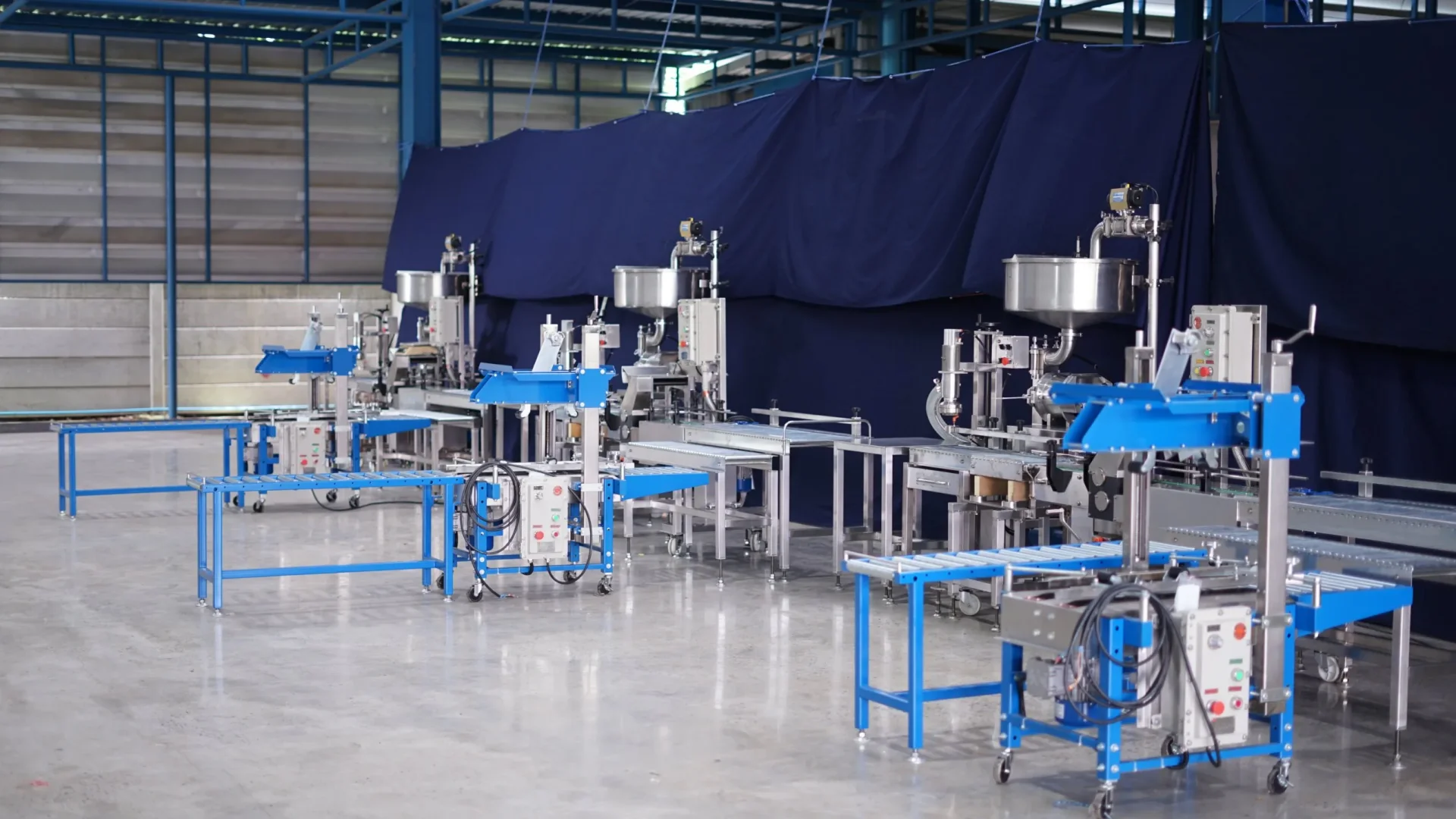
In industries where flammable gases, vapors, dusts, or liquids are present, a single spark can trigger a catastrophic explosion. Understanding what is explosion proof and how explosion-proof equipment is designed, certified, and applied is fundamental to protecting workers, facilities, and the surrounding environment. This guide covers everything from the core definition to certification standards, hazardous area classifications, and practical guidance for choosing the right equipment for your operation. For businesses handling volatile chemicals, a properly rated chemical filling machine is not optional it is a critical safety requirement.
What Is Explosion Proof?
Definition of Explosion-Proof Equipment
Explosion proof, in the context of industrial equipment and electrical installations, refers to a design standard that ensures a device can operate safely in environments where flammable or explosive atmospheres may be present. An explosion-proof enclosure does not prevent an internal explosion from occurring; rather, it is engineered to contain any ignition that takes place inside the equipment and prevent it from igniting the surrounding atmosphere.
The term "explosion proof" is primarily used in North American standards (NEC), while the international equivalent is "flameproof" (Ex d) under IEC and ATEX frameworks. Despite differences in terminology, the underlying engineering goal is the same: prevent an internal fault or spark from becoming an external disaster.
Explosion-proof equipment must meet rigorous design specifications, including the use of heavy-duty enclosures with precisely machined flame paths, reinforced cable entries, and temperature limits that keep external surface temperatures below the ignition point of surrounding gases or dusts.
Why Explosion Protection Matters in Industrial Environments
Explosive atmospheres can form whenever flammable materials mix with air in the right concentration. In industrial settings, this can happen during filling, mixing, transfer, and storage operations involving solvents, fuels, gases, or fine dust particles. Without properly rated equipment, ordinary electrical sparks, friction, or surface heat from motors and controls can serve as ignition sources.
The consequences of an explosion in an industrial facility go far beyond equipment damage. Fires, toxic releases, structural collapse, injury, and fatality are all realistic outcomes. Regulatory bodies worldwide have established strict standards requiring explosion-proof equipment in any location where an explosive atmosphere may exist permanently, intermittently, or under abnormal conditions.
How Does Explosion-Proof Equipment Work?
Explosion Containment and Flameproof Enclosures
The primary mechanism of explosion-proof equipment is containment, not prevention. A flameproof enclosure (designated Ex d) is built with walls thick enough and joints machined tight enough that if an internal explosion occurs triggered by an internal spark or arc, the resulting pressure is contained within the enclosure. The flame path (the gap between mating surfaces) is long and narrow enough that hot gases cool below ignition temperature before escaping to the outside atmosphere.
This engineering principle means the enclosure must be tested at multiples of expected internal explosion pressure. Typical testing pressures are 1.5 times the reference pressure of the most explosive gas mixture the equipment may encounter.
Preventing Ignition in Hazardous Environments
Beyond containment, other explosion protection concepts focus on removing the ignition source entirely. Intrinsically safe designs limit electrical energy in circuits to levels too low to cause ignition even under fault conditions. Pressurized and purged enclosures use inert gas or instrument air to keep flammable atmospheres from entering the equipment interior in the first place.
Temperature control is also critical. All explosion-proof equipment carries a temperature class (T-class) rating from T1 to T6, indicating the maximum external surface temperature the equipment will reach during operation. Equipment must have a T-class lower than the ignition temperature of the gases or dusts in the surrounding environment.
Explosion-Proof vs. Intrinsically Safe Equipment
These two concepts are often confused but serve different purposes and hazardous area levels.
- Explosion-proof (Ex d) equipment contains an internal explosion and prevents flame propagation outward. It is robust and suitable for high-power equipment like motors, pumps, and control panels operating in Zone 1 and Division 1 locations.
- Intrinsically safe (Ex i) equipment operates with such low energy that it cannot generate a spark or surface temperature capable of igniting the surrounding atmosphere, even under fault conditions. It is typically used for instrumentation, sensors, and communication devices in Zone 0 or Zone 1 environments where the continuous presence of explosive atmospheres demands the highest level of protection.
The choice between the two depends on the hazardous area zone, the type of equipment required, and the nature of the explosive substance present.
What Are the Different Types of Explosion Protection?
Flameproof Enclosures (Ex d)
Flameproof enclosures are the most widely used explosion protection method for heavy electrical equipment. The enclosure is built to withstand internal ignition and quench any escaping flame before it can reach the external atmosphere. All joints, cable glands, and openings are machined to tight tolerances. Suitable for motors, junction boxes, switchgear, and control panels in Zone 1 and Zone 2 (or Division 1 and Division 2) areas.
Increased Safety Protection (Ex e)
Increased Safety (Ex e) equipment applies additional design measures to prevent sparks, arcs, and excessive temperatures from occurring in the first place rather than containing an explosion after it starts. Techniques include larger creepage and clearance distances, higher-quality insulation, more robust mechanical construction, and tighter assembly tolerances. Ex e is not suitable for equipment that produces sparks during normal operation; it is used for terminal boxes, motors with special windings, and lighting fixtures where arcing does not occur under normal conditions.
Intrinsic Safety Protection (Ex i)
Intrinsic Safety (Ex i) limits the electrical and thermal energy available in a circuit to levels that cannot ignite an explosive atmosphere, even under two simultaneous faults. It is the only protection method suitable for Zone 0 areas where an explosive atmosphere is present continuously or for long periods. Ex i is the standard choice for sensors, transmitters, analyzers, and field instrumentation.
Pressurization and Purging Systems (Ex p)
Pressurization and purging (Ex p) prevents explosive atmospheres from entering an enclosure by maintaining a positive pressure of protective gas (typically instrument air or nitrogen) inside. This method is commonly used for large control panels, analyser cabinets, and enclosures that house non-explosion-proof equipment but must be located in hazardous areas. The system includes a purge cycle before energizing equipment and continuous pressure monitoring to shut down if pressure is lost.
What Are the Explosion-Proof Standards and Certifications?
ATEX Certification
ATEX (from the French "ATmosphères EXplosibles") refers to the two European Union directives that govern equipment and working conditions in explosive atmospheres: Directive 2014/34/EU for equipment and Directive 1999/92/EC for workers. Products sold within the EU for use in potentially explosive atmospheres must carry the ATEX mark, indicating they have been tested and certified by a Notified Body.
ATEX certification includes both the equipment category (indicating which zone it is suitable for) and the specific protection concept applied (Ex d, Ex e, Ex i, etc.). ATEX markings appear on the equipment nameplate along with the certifying body's reference number.
IECEx Certification
IECEx is the International Electrotechnical Commission's international certification scheme for explosion-protected equipment. While ATEX applies specifically within the EU, IECEx is accepted in over 50 participating countries as a single internationally recognized certification. Many manufacturers obtain both ATEX and IECEx certifications simultaneously, as the technical requirements are closely aligned.
IECEx certification is increasingly required in export markets throughout Asia, the Middle East, and Oceania, and is gaining acceptance as the preferred global standard over country-specific certifications.
NEC Class and Division Classification
In North America, the National Electrical Code (NEC) uses a Class and Division system to classify hazardous locations. Class indicates the type of hazardous material: Class I for flammable gases and vapors, Class II for combustible dusts, and Class III for ignitable fibers. Division indicates frequency of occurrence: Division 1 for locations where hazardous concentrations exist under normal conditions, and Division 2 for locations where they may occur under abnormal conditiหons.
Equipment rated for NEC Class I, Division 1 is the North American equivalent of IEC Zone 1 certification. Both UL (Underwriters Laboratories) and CSA (Canadian Standards Association) are the primary certification bodies for NEC-compliant explosion-proof equipment.
Understanding Hazardous Area Zones (Zone 0, 1, and 2)
The IEC Zone classification system divides hazardous areas based on the likelihood that an explosive atmosphere will be present:
- Zone 0 An explosive gas atmosphere is present continuously or for long periods. Examples: the interior of storage tanks, the space directly above open process vessels. Requires Ex i (intrinsic safety) or Ex ia protection as a minimum.
- Zone 1 An explosive gas atmosphere is likely to occur during normal operation. Examples: areas around pump seals, flanges, loading racks, and filling stations. Requires Ex d, Ex e, Ex p, or Ex i protection.
- Zone 2 An explosive gas atmosphere is not likely to occur during normal operation and, if it does, will exist only for short periods. Examples: areas around closed process systems that could release material only under abnormal conditions. Requires Ex nA (non-sparking) or other Zone 1 methods as a minimum.
For combustible dust, the equivalent zones are Zone 20, 21, and 22, following the same frequency-of-occurrence logic.
Which Industries Require Explosion-Proof Equipment?
Chemical and Petrochemical Industries
Chemical and petrochemical plants handle a wide range of flammable solvents, gases, and intermediates throughout production, mixing, filling, and transfer operations. From reactor areas and distillation columns to solvent storage and drum filling stations, the potential for explosive atmospheres is present at every stage. Explosion-proof motors, pumps, control panels, lighting, and instrumentation are mandatory throughout these facilities.
Oil and Gas Industry
The oil and gas sector has some of the most stringent explosion-proof requirements of any industry. Upstream drilling operations, midstream pipelines and compressor stations, and downstream refining and petrochemical processing all involve continuous exposure to flammable hydrocarbons. ATEX and IECEx certifications, or NEC Class I Division 1 ratings, are the baseline for any electrical or mechanical equipment installed in these areas.
Pharmaceutical Manufacturing
Many pharmaceutical manufacturing processes involve flammable solvents used in synthesis, extraction, and coating operations. Solvent-based reactions, granulation, and spray drying create explosive vapor environments that require Zone 1 or Division 1 rated equipment. GMP compliance requirements in pharmaceuticals also demand that explosion-proof equipment be designed for cleanability and contamination control.
Paint, Solvent, and Coating Production
Paint, varnish, lacquer, and coating manufacturers work with highly flammable solvents including toluene, xylene, ethyl acetate, and MEK throughout their processes. Mixing, milling, thinning, and filling operations all take place in environments where solvent vapors can accumulate to explosive concentrations. Explosion-proof equipment is required throughout these facilities, from mixing motors to filling lines.
Why Is Explosion-Proof Equipment Important for Chemical Filling Processes?
Risks of Flammable Liquids and Chemical Vapors
Filling operations present a particularly high explosion risk for one critical reason: the act of filling a container displaces the air inside with vapor from the liquid being filled. As liquid flows into a drum, bottle, or IBC, flammable vapor is pushed out through the vent creating a zone of explosive concentration directly around the fill point during every single filling cycle.
Pumping actions also generate static electricity, which can accumulate on non-grounded equipment and discharge as a spark. Combined with the continuous presence of flammable vapor during filling, an ungrounded pump or a non-explosion-proof motor on a filling head is a serious ignition hazard.
Explosion Protection Requirements for Filling Equipment
Filling equipment designed for flammable chemicals must address multiple ignition risks simultaneously. Motors driving pumps and conveyors must carry appropriate explosion-proof ratings for the hazardous zone. Electrical controls, solenoid valves, and sensors within the hazardous area must be intrinsically safe or explosion-proof rated. The filling head, nozzle, and liquid path components must be constructed of materials compatible with the chemical being filled and must include anti-static grounding connections. The machine frame and all liquid contact surfaces must be grounded and bonded to prevent static accumulation.
How to Choose a Chemical Filling Machine for Hazardous Environments
Selecting the right chemical filling machine for hazardous environments requires verifying that every electrical component on the machine carries the correct explosion-proof certification for your hazardous area zone. The machine should be equipped with an anti-static earthing system with continuity monitoring, be constructed from chemically compatible materials for the specific solvents or chemicals being filled, and meet the relevant local or international certification standards (ATEX, IECEx, or NEC/UL). A machine supplier with experience in paint, solvent, and chemical filling can provide documentation of the protection concepts applied to each component, not just a general machine-level claim.
Key Factors to Consider When Choosing Explosion-Proof Equipment
Identify the Hazardous Area Classification
Before specifying any equipment, the hazardous area must be formally classified. This involves identifying the flammable materials present, their vapor pressure and flash point, the likelihood that explosive concentrations will form, and the physical extent of the hazardous zone around each source. Formal area classification is typically performed by a process safety engineer and documented in a hazardous area drawing (HAD) or area classification document that becomes the reference for all equipment selection.
Check Equipment Certifications and Safety Standards
Once the area classification is established, every piece of equipment specified for installation within the hazardous area must carry a valid certification from a recognized body appropriate to your market and jurisdiction. Verify that the certification covers the specific explosive gas group and temperature class relevant to your process. The equipment's nameplate should show the certification mark, the protection concept, the equipment category, the gas group, and the T-class all of which must be appropriate for your classified area.
Evaluate Chemical Compatibility and Operating Conditions
Explosion protection is one dimension of equipment selection; chemical compatibility is another. Seals, gaskets, and wetted parts must be compatible with the chemicals being handled, as chemical attack can degrade materials over time and create leaks that become ignition hazard sources. Operating temperature ranges, process pressures, viscosity, and corrosiveness must all be evaluated to ensure the equipment will perform reliably within its safety ratings over its intended service life.
Consider Maintenance and Long-Term Safety
Explosion-proof equipment requires specific maintenance practices to remain compliant. Enclosure integrity must be verified regularly damaged threads, corroded joints, or missing fasteners can compromise the flameproof protection. Intrinsically safe installations require documented wiring verification and must not be modified without re-certification review. Suppliers who offer local service support, spare parts availability, and maintenance documentation play an important role in sustaining the long-term safety of explosion-proof installations.
Contact Us:
- LINE
- Facebook: https://www.facebook.com/asiaengineeringpac
- Youtube: https://www.youtube.com/@asiaengineeringpacth
- Email: sales@asiaengineeringpac@co.th
- โทร: 02 806 4501, 087 542 9042
Frequently Asked Questions (FAQs) About Explosion-Proof Equipment
Q: What is explosion proof, in simple terms?
A: Explosion-proof refers to equipment designed and certified to operate safely in environments where flammable gases, vapors, or dusts may be present. An explosion-proof device either contains any internal ignition within a robust enclosure or operates with too little energy to trigger ignition in the surrounding atmosphere.
Q: What is the difference between explosion-proof and explosion-resistant?
A: Explosion-proof (or flameproof) equipment is formally certified under recognized standards (ATEX, IECEx, NEC) to meet specific engineering requirements. "Explosion-resistant" is not a formal certification classification and may simply indicate the equipment is more robust than standard without any guarantee of compliance with hazardous area protection requirements. Always verify actual certification for any equipment intended for use in a classified hazardous area.
Q: Does explosion-proof equipment prevent explosions from happening?
A: Not necessarily. Flameproof enclosures (Ex d) are designed to contain an internal explosion and prevent it from propagating to the surrounding atmosphere not to prevent the ignition itself. Other protection concepts, such as intrinsic safety (Ex i) and pressurization (Ex p), do work by removing the ignition source or preventing the explosive atmosphere from reaching the equipment, but the underlying process risk of flammable materials remains.
Q: What gas group certification do I need for solvents like toluene or xylene?
A: Most common organic solvents, including toluene, xylene, acetone, and ethanol, fall into Gas Group IIA (Propane reference gas) under IEC classification. Some solvents, such as ethyl ether and acetaldehyde, fall into the more sensitive Group IIB. Equipment certified for Group IIB is also suitable for Group IIA environments. Checking the specific gas group of your chemical against the certified gas group of your equipment is a mandatory step in area classification compliance. For paint and chemical filling applications, consulting the chemical filling machine supplier about the specific solvents you process will help confirm the appropriate certification scope.
Q: Can standard industrial equipment be modified to become explosion-proof?
A: In general, no. Explosion-proof certification is awarded to a specific equipment design as tested and documented. Field modifications that alter the enclosure, wiring, or components typically void the certification. The only compliant approach is to purchase equipment already certified for the required hazardous area classification, or to work with the original equipment manufacturer to obtain re-certification after modification.


